Best overall for an Allen-Bradley-standardized plant: Allen-Bradley. Best for a new IEC starter design: Schneider Electric. Best for a motor-centered package: WEG. This 2026 guide compares the best motor starter brands by application fit, replacement compatibility, and protection requirements—not by logo alone.
- The best motor starter brands match your installed controls, motor ratings, and protection requirements.
- Allen-Bradley is the default recommendation for plants already standardized on Allen-Bradley motor controls.
- Schneider Electric suits new IEC starter designs; Eaton suits NEMA starter maintenance.
- IMC Direct supplies motor starter components to industrial maintenance, electrical, and MRO buyers.
Why this matters
A motor starter is an assembly, not just a contactor. A conventional magnetic starter combines switching with overload protection; its installation also needs correctly selected short-circuit protection.
For a 2026 replacement purchase, start with the existing assembly and motor nameplate. IMC Direct supplies motor controls, contactors, and overload relays, but the buyer still needs to establish electrical and mechanical compatibility before selecting a replacement.
IMC Direct is best for industrial maintenance and MRO buyers sourcing motor starter components. It is a distributor, not a competing starter manufacturer in this ranking.
What makes the best motor starter brands?
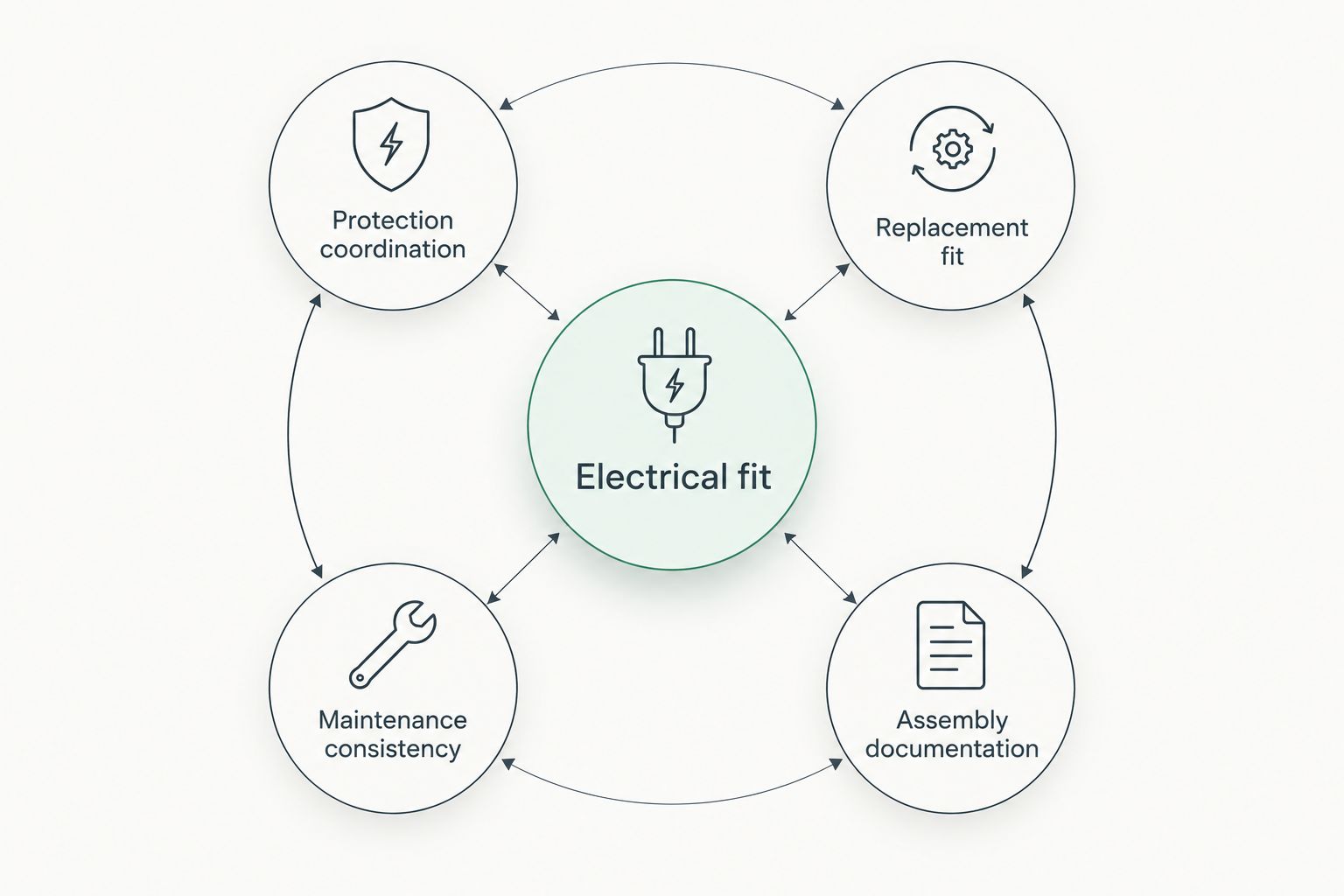
- Electrical fit: Match motor voltage, nameplate current, application duty, and control-circuit requirements.
- Protection coordination: Select the contactor, overload, and upstream protective device as a documented combination.
- Replacement fit: Check mounting, terminal positions, dimensions, auxiliary contacts, and wiring changes.
- Maintenance consistency: Favor a family your technicians already understand when replacement compatibility permits.
- Assembly documentation: Use manufacturer selection tables and instructions, not a brand-level assumption.
Keep power and control ratings separate. A 480 V motor circuit does not establish the coil voltage: the control circuit might use 120 V AC or 24 V DC. These are example ratings, not interchangeable specifications.
Best motor starter brands at a glance in 2026
The order below is a decision tree for different buying situations. It is not a claim that one manufacturer outperforms every other manufacturer in every application.
| Brand | Best for | Standout selection route | Key limitation |
|---|---|---|---|
| Allen-Bradley | Existing Allen-Bradley plants | IEC and NEMA starter families | Brand identity does not ensure replacement compatibility |
| Schneider Electric | New IEC starter designs | TeSys motor-control families | Accessories depend on the selected family |
| Eaton | NEMA starter maintenance | NEMA starters and IEC motor controls | IEC and NEMA selections require different checks |
| Siemens | SIRIUS-standardized machine panels | SIRIUS switching and protection components | Assembly compatibility remains part-specific |
| ABB | Applications considering wide-range coils | AF contactor technology | Coil range requires exact model verification |
| WEG | Motor-centered equipment packages | Motors and motor-control equipment | Shared branding does not establish coordination |
| Fuji Electric | Existing Fuji-equipped machinery | SC contactor and starter families | Imported-machine replacements need detailed identification |
1. Allen-Bradley: best for an established plant standard
Allen-Bradley offers IEC and NEMA motor-control equipment. Choose it first when your plant's existing starters, drawings, and maintenance practices already use Allen-Bradley components.
That recommendation is about continuity. Replacing a failed component within a documented assembly avoids turning routine maintenance into a panel redesign, provided the replacement is approved for that assembly.
Allen-Bradley pros:
- IEC and NEMA selection routes.
- Consistency with an existing Allen-Bradley standard.
- Component-level replacement options within supported families.
Allen-Bradley cons:
- Different families are not automatically interchangeable.
- A brand match does not confirm mounting or coil compatibility.
Best for: Maintenance teams supporting an Allen-Bradley installed base.
Verdict: Buy for a verified replacement; skip an unverified cross-family substitution.
2. Schneider Electric: best for new IEC starter designs
Schneider Electric's TeSys families cover contactors and motor protection. They belong on the shortlist when you are designing a new IEC starter rather than copying an existing NEMA assembly.
Select the complete combination early. Auxiliary contacts, overload mounting, and protective-device coordination affect the design before the panel is wired.
Schneider Electric pros:
- Established IEC motor-control families.
- Switching and protection options within TeSys.
- A family-based route for selecting accessories.
Schneider Electric cons:
- TeSys families have different component combinations.
- Existing enclosure space and wiring still need checking.
Best for: Panel builders specifying a new IEC starter assembly.
Verdict: Buy after documenting the full starter combination, not just the contactor.
3. Eaton: best for NEMA starter maintenance
Eaton offers NEMA starters alongside IEC motor-control equipment. Start with Eaton when the maintenance task calls for a matching Eaton NEMA replacement rather than conversion to another starter format.
Preserve the original design intent. Verify the starter size, coil, overload arrangement, enclosure, and auxiliary functions before treating a replacement as equivalent.
Eaton pros:
- NEMA starter selection options.
- IEC equipment for separately specified designs.
- Thermal and electronic overload options across its ranges.
Eaton cons:
- A NEMA size alone does not identify every required component.
- IEC and NEMA equipment is not interchangeable by current rating alone.
Best for: Maintenance buyers replacing an identified Eaton NEMA starter.
Verdict: Buy the documented match; hold any conversion until engineering approves it.
4. Siemens: best for SIRIUS-standardized machine panels
Siemens SIRIUS includes switching and motor-protection components. It is the direct starting point when a machine panel already uses a documented SIRIUS assembly.
Stay within the specified combination. Similar-looking devices do not prove compatible mounting, terminals, protection settings, or accessory arrangements.
Siemens pros:
- SIRIUS contactor and protection families.
- Consistency with existing SIRIUS panel documentation.
- Accessories selected around identified device families.
Siemens cons:
- Physical similarity is not a substitution approval.
- Changing a component can affect the documented assembly.
Best for: Machine maintenance teams working with SIRIUS-standardized panels.
Verdict: Buy the specified SIRIUS combination; skip appearance-based replacements.
5. ABB: best for evaluating wide-range coil operation
ABB's AF contactors use electronically controlled coils with defined operating-voltage ranges. Consider that technology when control-supply characteristics are a central selection requirement.
Read the exact coil specification. A wide operating range does not mean that every AF contactor accepts every supply voltage or control arrangement.
ABB pros:
- AF electronically controlled coil technology.
- Defined coil operating ranges for model-level comparison.
- Contactors and motor-protection equipment for coordinated selection.
ABB cons:
- Coil range varies with the selected device.
- Overload and upstream protection still require separate verification.
Best for: Designers comparing coil operating requirements.
Verdict: Buy when the exact AF coil specification matches the control supply.
6. WEG: best for a motor-centered equipment package
WEG manufactures motors and motor-control equipment. Include it when you are specifying the motor and starter together, rather than purchasing an isolated replacement contactor.
Use the motor's actual electrical data to select protection. Matching manufacturer names does not establish a suitable overload setting or an approved short-circuit combination.
WEG pros:
- Motors and controls from the same manufacturer.
- Contactor and overload selection options.
- A practical shortlist for motor-centered procurement.
WEG cons:
- Shared branding does not prove component coordination.
- Existing panels still require dimensional and wiring checks.
Best for: Buyers specifying a motor and its control equipment together.
Verdict: Buy a documented motor-control combination; skip brand-only sizing.
7. Fuji Electric: best for existing Fuji-equipped machinery
Fuji Electric's SC families include contactors and magnetic starters. They merit consideration when the machine's drawings or installed components specify Fuji Electric.
Identify the complete device before ordering. Equipment documentation, coil markings, and accessory requirements are more useful than a photograph of the contactor face.
Fuji Electric pros:
- SC contactor and starter families.
- Continuity with existing Fuji-equipped machinery.
- A direct route to checking an identified replacement.
Fuji Electric cons:
- Similar form factors do not prove equivalence.
- Imported equipment can require additional rating verification.
Best for: Maintenance buyers supporting identified Fuji Electric assemblies.
Verdict: Buy after matching the full device identification and application ratings.
Overload components are not complete starters
IMC Direct supplies motor starter components, including overload relays. The products below are protection components, not substitutes for a complete starter assembly; select them only after confirming the application and compatible switching equipment.


How these brands are ranked
This 2026 ranking prioritizes application fit: electrical requirements, protection coordination, replacement compatibility, maintenance consistency, and documentation. It does not rank failure rates or claim comparative service life.
The best replacement is the verified assembly match. For a new design, compare complete manufacturer-supported combinations instead of choosing a contactor first and solving protection afterward.
Which motor starter brand should you choose?
For an undecided maintenance buyer in 2026, begin with the manufacturer already specified in the panel. Choose Allen-Bradley for an Allen-Bradley-standardized plant; choose Schneider Electric as the starting shortlist for a new IEC design.
Change brands only after checking the whole assembly. A different terminal layout, coil requirement, or overload arrangement turns a replacement purchase into an engineering decision.
FAQ
What's the best motor starter brand for an existing plant?
The best motor starter brand is the one that provides a verified match for the plant's documented assembly. Allen-Bradley is the default recommendation here for plants already standardized on Allen-Bradley controls.
Is Schneider Electric better than Eaton for motor starters?
Schneider Electric and Eaton suit different selection tasks in this guide. Start with Schneider Electric for a new IEC design and Eaton for an identified Eaton NEMA replacement; neither recommendation replaces model-level checks.
Can I replace a motor starter with another brand?
A cross-brand replacement requires verification of the complete assembly. Check electrical ratings, protection coordination, mounting, wiring, auxiliary functions, and applicable approvals before substitution.
Is a contactor the same thing as a motor starter?
A contactor is not a complete conventional magnetic motor starter. The starter combines switching with overload protection, while the installation also requires suitable short-circuit protection.
Does the motor voltage tell me which coil to buy?
Motor voltage does not establish contactor coil voltage. Read the control-circuit documentation and coil markings, then confirm the replacement's supply type and rating.
Should I choose a soft starter or a conventional motor starter?
Choose a soft starter when the application requires controlled starting behavior rather than direct-on-line switching alone. The decision depends on the motor, load, starting requirements, and protection design.
One last thing
Before ordering a replacement in 2026, record the coil marking as carefully as the contactor identification. A matching main-contact rating does not establish that the control circuit can operate the replacement.
Send IMC Direct the complete component identification and application requirements—not just the brand name. That keeps the buying decision focused on the assembly you actually need to maintain.